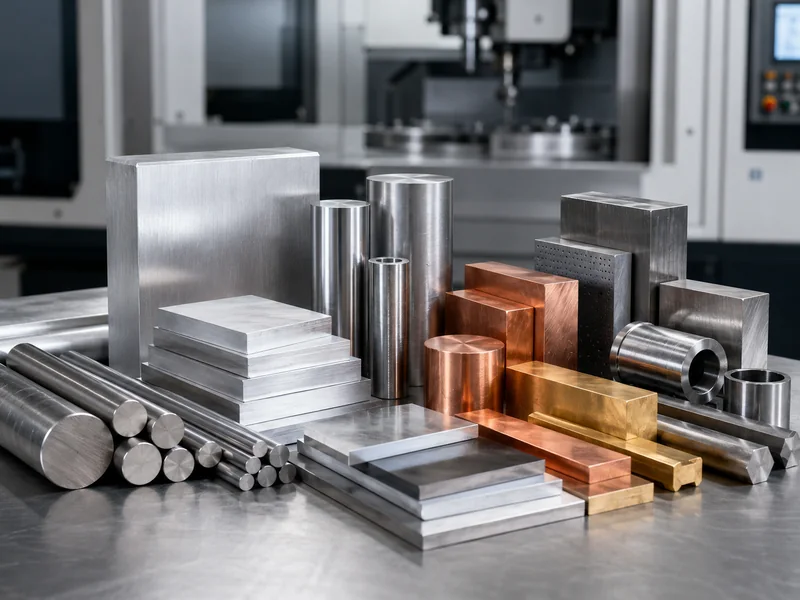
Aluminum is the most commonly machined metal at WFX, and for good reason: it is light, strong, corrosion-resistant, machines quickly, and anodizes beautifully. But "aluminum" covers dozens of alloys with very different properties. This guide compares the grades we machine most and explains when to choose each one.
The alloys we machine most
| Alloy | Tensile strength | Machinability | Best for |
|---|---|---|---|
| 6061-T6 | ~310 MPa | Excellent | General purpose, structural parts, enclosures |
| 7075-T6 | ~570 MPa | Good | Aerospace, high-stress components |
| 2024-T3 | ~485 MPa | Good | Aircraft structures, high fatigue resistance |
| 5052-H32 | ~230 MPa | Fair | Sheet metal, marine environments |
| 6082-T6 | ~310 MPa | Excellent | European-spec structural parts |
| A356 / ADC12 (cast) | ~230–260 MPa | Good | Die-cast housings with CNC finishing |
6061-T6: the default choice
If you have no special requirement, start with 6061-T6. It offers the best balance of strength, cost, availability, weldability, and anodizing response. It machines fast with excellent surface finish, which keeps cycle times — and your price — low. Roughly seven out of ten aluminum parts we quote end up in 6061.
7075-T6: when strength rules
With a tensile strength approaching some steels at one-third the weight, 7075-T6 is the alloy for highly loaded aerospace parts, robotics linkages, and racing components. Trade-offs: it costs more, is harder on tooling, resists corrosion less than 6061, and is not weldable. Use Type III hard anodizing for wear surfaces.
2024-T3: fatigue resistance
2024 shines in cyclic-load applications such as aircraft skins and structural fittings. Its copper content makes it vulnerable to corrosion, so it is usually anodized or primed. Choose it when fatigue life — not just static strength — drives the design.
5052-H32: forming and marine use
5052 is the alloy for sheet metal fabrication: it bends without cracking and has outstanding salt-water corrosion resistance. It gums slightly when machined, so it is rarely the right pick for complex milled parts.
Cast alloys: A356 and ADC12
For housings and heat-dissipating enclosures produced in volume, casting plus CNC finishing beats machining from billet on cost. A356 (gravity/low-pressure) takes T6 heat treatment; ADC12 (high-pressure die casting) suits thin-walled, high-volume geometry. We machine sealing faces, bores, and threads after casting to achieve tight tolerances where they matter.
Anodizing behavior differs by alloy
6061 and 6082 anodize uniformly with good color; 7075 tends slightly darker; 2024 can show a yellowish tint; ADC12's silicon content produces a grey, less decorative finish. If cosmetic anodizing matters, tell us up front — alloy and finish should be chosen together. More on this in our surface finishing guide.
How to decide
Start from the requirement, not the alloy: highest stiffness-to-weight and general use → 6061; maximum strength → 7075; fatigue-critical aircraft structure → 2024; bent sheet or marine exposure → 5052; high-volume housings → cast A356/ADC12 with CNC finishing. Still unsure? Upload your model and note the application — our engineers will recommend a grade with your quote.
